SAGAING – Nearly six years of ongoing conflict triggered by the February 2021 military coup have placed a heavy burden on women and children in conflict-affected areas of Myanmar – particularly in Sagaing. Beyond injuries sustained during airstrikes and ground operations, many are living with the psychological trauma of witnessing or experiencing violence, the constant insecurity caused by unpredictable airstrikes and attacks, and the struggle to make ends meet. Yet professional mental health care remains out of reach for many. Women and children who have survived traumatic incidents often have little or no access to professional mental -health services.
Text & Pictures by Josephine Chyi
Editing by Shwe Zin Soe and Shwe Nakamwe
Daw Pearl lost all three of her triplet daughters in her ninth month of pregnancy while fleeing an attack by ground troops of the military regime. They would have been her first children.
“I felt terrible a lot in the early period after their death. My husband was very supportive at that time,” she said. “He often said these things happened, don’t be sad,” she said.
She did not receive professional mental health services. “I had to struggle with my emotional well-being with the support of my family,” she continued.
“It’s about Karma, what else can we say?” said Daw Sein, Daw Pearl’s mother-in-law.
“We just made sure she had her meals and slept regularly at that time,” she continued. Daw Sein said she deleted photographs of the triplets’ bodies. “Because she cried all the time looking at it,” she said.
In the absence of professional support, much of the work of caring for Daw Pearl fell to relatives who were living through the conflict themselves. They could make sure she ate and slept. Knowing what to say when she was grieving, or how to respond when looking at the photographs made her cry, was harder. These were decisions the family had to navigate on its own.
People may experience what is known as acute stress for a week to a month after a traumatic event. In the following months, they may develop post-traumatic stress disorder (PTSD). If these difficulties are not adequately addressed, they may persist or develop into other mental -health problems. Some people may continue to experience anxiety or phobias over a prolonged period.
Trauma and mental -health difficulties can develop and change over different periods of time, said Ko Wai Yan, a trauma counsellor with Purple Window, a counselling and psychosocial support service which, like several others, was founded in Myanmar but has had to shift operations to Thailand in the post-coup landscape.
Purple Window was established in late 2021, remotely serving people engaged in revolutionary and resistance groups. They left the country in 2024 due to security issues, according to Ko Wai Yan.
For many providers, including Purple Window, safety concerns and the constraints of working amid conflict mean they can only offer online support to people in Myanmar. Nationwide power shortages, gaps in internet coverage, and military surveillance of communications impose severe access barriers.
“We cannot say everyone who has experienced a traumatic event will necessarily develop psychological trauma or a mental health disorder,” Ko Wai Yan explained. “Some people have strong social support from their families or communities, and this support system can help them cope with what they have experienced”.
A nationwide, population-based study undertaken in the immediate aftermath of the military takeover found that 34.9% of adults in Myanmar reported a probable mental disorder, including PTSD, depression, and anxiety, amid the country’s overlapping crises of COVID-19, conflict, and economic collapse.
A cross-sectional survey published in 2025 found that girls and young women who experienced more conflict-related stressors reported more symptoms of depression. The survey included 750 participants aged 10 to 21 from five states and regions of Myanmar: Yangon, Mandalay, Kachin, Shan and Tanintharyi. Among the respondents, 94.4% reported at least one symptom of depression, while 16.1% reported all five symptoms of depression. Another 28.2% reported having considered harming themselves.
THE DOUBLE BURDEN OF CARE
Expectations to care for their husbands and children and manage the household can leave women little time to rest, even when they’re dealing with menstrual symptoms, exhaustion, illness or emotional distress. Repeatedly suppressing their emotions and stress can lead to chronic stress, self-neglect, and accumulated physical and psychological health problems, according to Nang Ei Ei Mon, a certified trauma-informed leadership coach and founder and CEO of How She Did It.
For some women caring for injured children and families amid the conflict, access to mental health care remains out of reach.
Daw Thuzar has struggled with sleep, temporary memory loss, and low blood levels. Yet she has had little opportunity to rest or take time for herself. She has become the household’s main breadwinner since her husband became unwell following a poisonous snake bite.
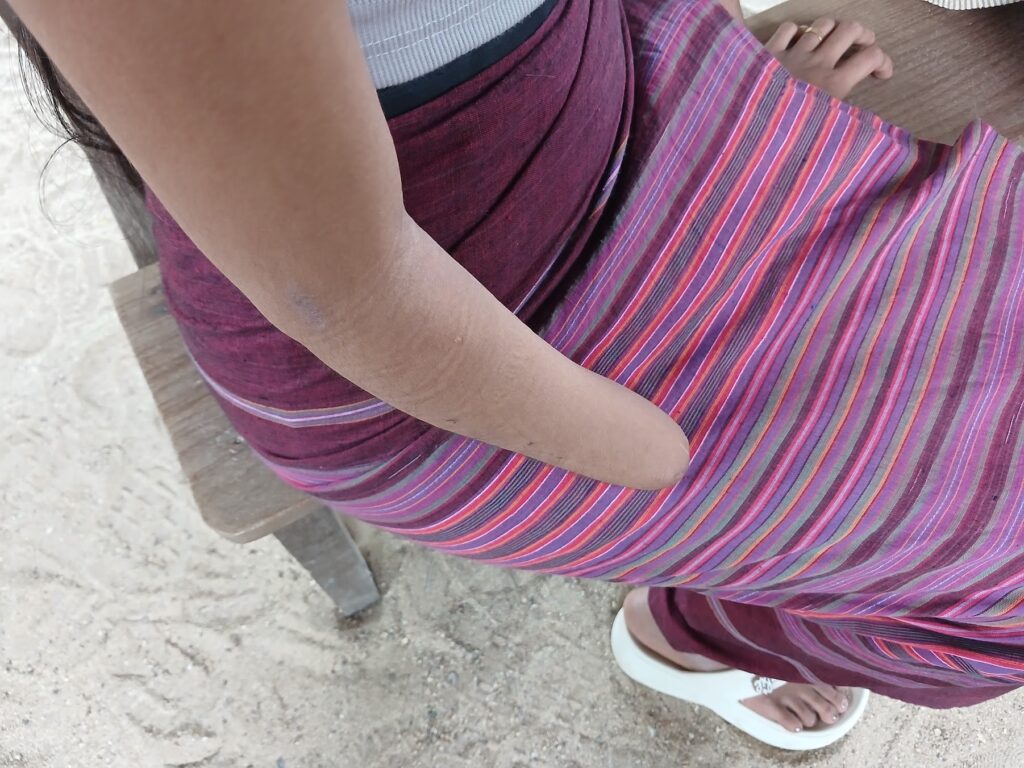
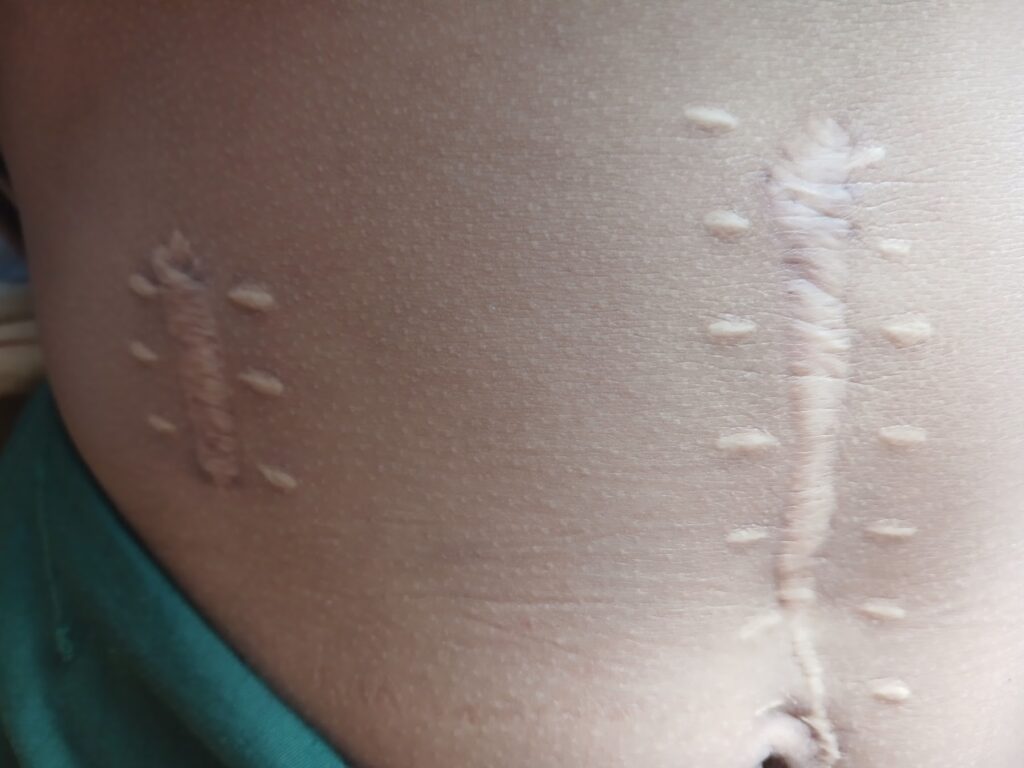
Her nine-year-old daughter was seriously injured in an airstrike and underwent two surgeries to treat injuries to her large intestine and face.
At noon in 2025, an airstrike struck a school in Owe Tain Twin village, Sagaing Region, killing 22 students and two teachers and injuring dozens of other students. Since the incident, children in the village have experienced intense fear of loud noises resembling the sound of an airstrike.
“This case usually jumps into my head whenever I am alone. Although my child did not pass away, I feel so terrible about the students who did pass away. I still cannot forget what happened,” said Daw Thuzar.
She has also struggled to make ends meet while covering the education and healthcare costs of her two children and caring for her husband, whose health remains fragile. She has no idea where to seek psychological treatment for herself or her daughter.
Her daughter is gradually recovering and has returned to school, but she remains frightened by loud noises.
Several months after the airstrike, another 10-year-old girl had a seizure after being startled by the sound of a loudspeaker being tested at a community feast.
The children respond to the voice of airplanes or jet fighters passing over their village more sensitively than before.
U Own Tun, the village administrator, said many children preferred to move to their farmlands outside the village soon after the airstrike.
“They don’t want to go around the school and stay in the village. They run away here and there whenever they hear the sound of airplanes crossing over their village,” he said.
The psychological impact of the airstrike also made parents hesitant to let their children return to school.
“We have to keep serving education without prolonged delay,” according to U Own Tun.
For children under 15, growing up amid the political crisis and ongoing conflict poses serious challenges to their future development.
“Since they do not enter adulthood with fully developed brains while developing them, they need encouragement, understanding, hope, mentorship, guidance in the right direction, support to help them have something stable, and help in building healthy relationships with one another,” said Nang Ei Ei Mon.
The village administration team and schoolteachers took on greater responsibility for persuading parents to allow their children to continue their education.
“A child feeling terrible for losing a part of their body would get worse without benefiting from education,” said Daw Tin Tin*, headmistress of Owe Tain Twin School.
Concerned about the decline in student enrolment, she visited many children’s homes and met with their parents to encourage them to return their children to school, although she could not persuade everyone.
Mon Mon*, a top student in the sixth grade, lost an eye in the incident. She recalls, “We heard the sounds of airplanes. A teacher saw the aircraft circling overhead, and she ordered us to run away. She went to the other classrooms [to help students] run away, but she died on her way.”
Mon Mon’s grandmother believes “no education is worth more than a child’s life”, yet has reluctantly agreed to let Mon Mon return to school because of the girl’s grim determination to continue her studies.
The military junta denied carrying out the airstrike, claiming instead that resistance groups had been using the school to manufacture weapons. Local witnesses, including parents, children, and a surviving schoolteacher, rejected this dubious claim.
The sound of aircraft, including fighter jets and passenger planes, flying over their village has become common for the locals in the region since the conflict began in 2021.
LACK OF MENTAL HEALTH SUPPORT
Professional mental health care remains out of reach for many people affected by the conflict. The children and adults described above are among those who have yet to receive it.
“Professional mental health support is not accessible even for us yet, the medical staff on the ground,” said Ma Khaing*, a 28-year-old CDM nurse working as a medical staff member in a resistance-held area in Sagaing Region.
Children who witness violence in conflict zones may face the effects of traumatic experiences, leaving physical, psychological, and neurological scars affecting their overall health and well-being, according to Ms. Nyo Mee, Specialist of Mental Health and Psychosocial Support.
“When trauma affects not only the individual but also the entire community, its consequences can extend to the community as a whole,” she said.
She highlighted that the effects could threaten not only the future of these children but also contribute to intergenerational trauma, potentially affecting generations to come.
The Inter-Agency Standing Committee (IASC) framework for Mental Health and Psychosocial Support (MHPSS) places basic services and security at its foundation, followed by community and family support, as outlined in its Guidelines on Mental Health and Psychosocial Support in Emergency Settings.
“Psychological support will not work if a person’s basic needs are not met. If the person lacks security, making it safe for her is the first condition,” Ko Wai Yan emphasized.
Survival alone is not enough when people are unable to live with dignity, and such a condition could take a toll on the mental health of people, according to Ms.Nyo Mee.
Efforts to restore the safety and opportunity to live with dignity themselves are the forms of psychological support, she mentioned.
“Addressing these challenges is not just about improving the lives of women and children; it is equally about restoring the mental and physical well-being of communities across the country,” she continued.
For Daw Pearl and Daw Thuzar, however, life continues to revolve around whatever comes next.
Daw Pearl and her husband continue to hope for children. Daw Thuzar, the breadwinner of her family, wants her two children to receive an education so that they can contribute to their community and the wider world.
For both women, that hope remains tied to survival – and to a future beyond the conflict.
This story was produced with support from Asia Pacific Forum on Women, Law and Development (APWLD)’s Feminist Media Fund for Alumni.
Readers seeking mental health counseling or psychosocial support may consult the list below for links to possible service providers:
- Counselling Corner
(This is paid organization and based in Yangon.) - Marble Psychology
(This intends to Southeast Asia. The languages on website are in English. This is not for grassroots people or people amid conflicts) - Hepta Mental Health Clinic (They are based in Yangon)
- Love and Light Counselling (They are based in Yangon.)
- Honest Hour
(Website is in both of English and Burmese. They are based in Yangon.) - Mental Playground (Website is in English. There are reviews of Burmese customers)
- Caltha Wellness
(partner website – need to appoint for counseling. The appointment process is in English. It is not for grassroots people or people amid conflict) - Aung Clinic Mental Health Initiative
(Website is in Burmese. Based in Yangon) - Purple Window Counselling (PW founder said they hold the political ideology, so they left the country unlike many humanitarian organizations registered to work under the junta military)
- Serenity Mental Health Counseling and Psychosocial Support Services
(Website in Burmese and English. Provides counseling as well as mental health training courses).